Flo Budget: A Complete Guide to Flow-Based Budgeting
Learn how flo budget methods work with your money's natural movement. Set up flow-based budgeting with practical steps, account structures, and timing strategies.

Most budgets fail because they feel like a straitjacket. You assign every dollar to a category, something unexpected happens, and suddenly you're either "cheating" on your budget or drowning in guilt. That's exactly why flo budget methods have gained traction—they work with the natural movement of your money instead of against it.
I spent years trying to make traditional budgeting work. Spreadsheets, apps, the envelope system—you name it, I tried it. The problem wasn't discipline. It was that my income and expenses didn't arrive in neat, predictable patterns. Some months I'd have three paychecks. Other months, my car insurance would hit at the worst possible time. Traditional budgets couldn't handle that chaos.
Flow-based budgeting changed everything. Instead of rigid categories, you're managing the movement of money through your accounts. Think of it like directing water through channels rather than trying to hold it still in buckets.
What Exactly Is a Flo Budget?
A flo budget—sometimes called flow budgeting or cash flow budgeting—focuses on timing rather than just totals. The core idea is simple: money flows in, money flows out, and your job is to make sure those flows don't crash into each other.
Here's what that looks like in practice. Say you earn $4,200 per month after taxes. A traditional budget might say: $1,400 for housing, $600 for food, $400 for transportation, and so on. That's fine on paper. But what happens when your rent is due on the 1st, your paycheck doesn't hit until the 5th, and your car payment auto-drafts on the 3rd?
A flo budget accounts for this. You're not just tracking how much you spend—you're tracking when money moves and making sure you always have enough in the right place at the right time.
This approach borrows heavily from how businesses manage cash flow. Companies don't just look at annual revenue; they obsess over whether they'll have enough cash on hand next Tuesday to make payroll. Personal finance should work the same way.
The three pillars of flow budgeting are:
- Timing awareness — knowing exactly when income arrives and expenses leave
- Buffer maintenance — keeping enough cushion to handle timing mismatches
- Active direction — moving money intentionally between accounts based on upcoming needs
How to Set Up Your Own Flo Budget System
Getting started with flow budgeting doesn't require fancy software or complicated spreadsheets. Here's the straightforward process I use.
Step 1: Map Your Money Movement
Before you can direct the flow, you need to see it. Pull up your last three months of bank statements and note two things for every transaction: the amount and the date.
You're looking for patterns. When do your paychecks hit? What day of the month does your landlord cash your rent check? When do subscriptions charge? Creating a budget flow chart helps visualize this—you'll quickly spot the danger zones where outflows exceed inflows.
Most people discover they have one or two "crunch periods" each month. For me, it was always the last week. Mortgage, utilities, and insurance all clustered together right before payday.
Step 2: Calculate Your Minimum Buffer
Once you see your flow patterns, figure out the largest gap between inflows and outflows. If you have $800 in bills due before your next $2,100 paycheck, you need at least $800 sitting in your account at all times—that's your minimum buffer.
I recommend adding 25% to whatever number you calculate. Life throws curveballs. A $1,000 buffer gives you breathing room for the inevitable surprise expense.
Step 3: Create Flow Channels
This is where flo budgeting gets powerful. Instead of one checking account doing everything, you create dedicated "channels" for different purposes:
- Operating account — where income lands and daily spending happens
- Bills account — money flows here specifically for fixed expenses
- Flex account — holds money for flexible expenses like groceries, entertainment, and dining out
When your paycheck hits, you immediately direct portions to each channel. Bills money goes to bills. Flex money goes to flex. What remains in operating is truly available for spending.
This isn't just organizational—it's psychological. When you see $400 in your flex account, you know that's what you have for discretionary spending. No mental math required.
Why Traditional Budgets Often Fail (And Flow Budgets Don't)
I'm not trying to trash traditional budgeting entirely. For some people, it works beautifully. But there are structural reasons why flow-based approaches succeed where category-based budgets struggle.
Traditional budgets assume static conditions. They're built on averages and monthly totals. But your financial life isn't average—it's specific. You don't spend "$500 on groceries per month." You spend $127 on Saturday, $43 on Tuesday, and so on. The timing matters.
Category budgets create false scarcity. Ever had $200 left in your "dining out" category but felt broke anyway? That's because the money existed in a spreadsheet, not in your actual cash flow. Flow budgeting keeps you grounded in reality.
Rigid systems break under pressure. When something unexpected happens—a medical bill, car repair, family emergency—traditional budgets require you to "re-budget." Flow systems just absorb the impact and keep moving. You might need to slow down spending for a week, but you don't have to rebuild your entire financial plan.
The people I've seen succeed with flo budgeting share one trait: they've usually failed at traditional budgeting first. They're not looking for perfection. They want something that actually works with their messy, real-world financial life.
How Much Should You Keep in Each Flow Account?
This question comes up constantly, and honestly, the answer depends on your specific situation. But here are some starting guidelines that work for most people.
Operating account: One week of typical spending plus your minimum buffer. For someone spending $150/day on average, that's about $1,050 plus your calculated buffer. Round up to $1,500 or $2,000 for simplicity.
Bills account: Your total monthly fixed expenses. Rent, utilities, insurance, subscriptions, loan payments—add them all up. That's your target balance right after you get paid. This account should drain down throughout the month and refill with each paycheck.
Flex account: Whatever you've allocated for variable spending. If you've decided $800/month goes to groceries, entertainment, and personal care, that's your number. Some people further divide this into sub-accounts, but I find that overcomplicates things.
The magic happens when these accounts operate semi-independently. Your bills account doesn't care if you overspent on dining out—the money for rent is already set aside. Your flex account doesn't panic when a big insurance premium hits—that came from bills.
Tools and Apps That Support Flow Budgeting
You can run a flo budget system with nothing but a basic spreadsheet and multiple bank accounts. But the right tools make it dramatically easier.
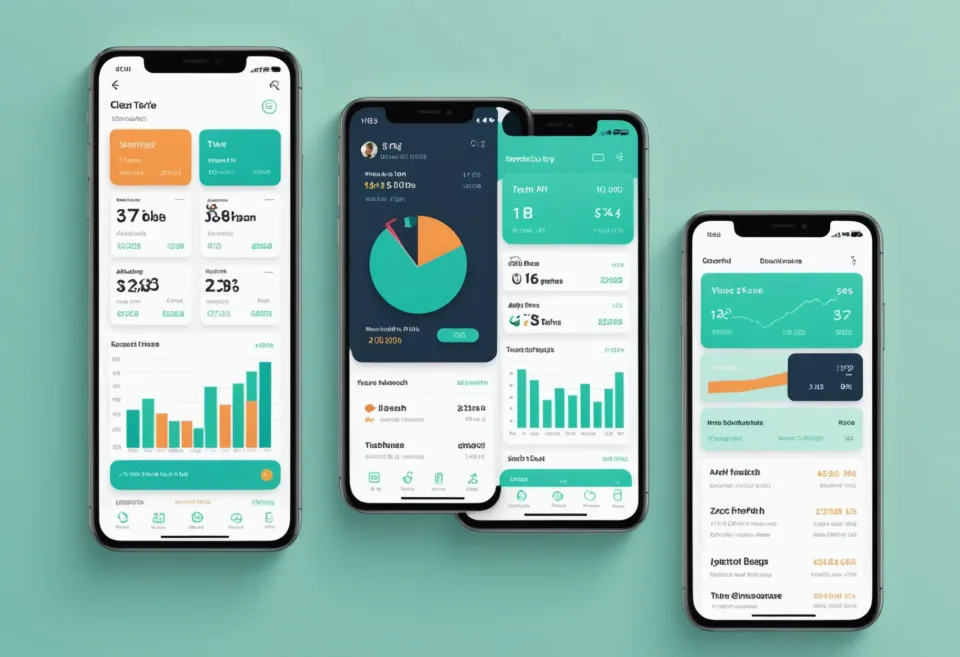
For tracking cash movement, a dedicated cash flow tracker helps you see patterns you'd otherwise miss. You want something that shows you not just totals but timing—when money moved, not just how much.
Some banks now offer built-in "buckets" or "spaces" that let you segment one account into virtual sub-accounts. This is perfect for flow budgeting without opening multiple actual accounts.
If you want something that handles the tracking and categorization automatically, KlutterAI connects to your accounts and shows you exactly how money flows through your financial life. It's particularly useful for spotting those timing crunches before they become overdrafts.
The key is finding a tool that matches how you actually think about money. Some people need visual graphs. Others prefer simple numbers. Don't force yourself into a system that fights your natural tendencies.
Common Flo Budget Mistakes (And How to Avoid Them)
After helping people set up flow-based systems, I've seen the same mistakes repeatedly. Here's what to watch for.
Mistake #1: Underfunding your buffer. The minimum buffer calculation assumes everything goes according to plan. Nothing ever goes according to plan. Build in more cushion than you think you need.
Mistake #2: Treating flow accounts like savings. Your bills account isn't savings—it's money waiting to be spent. Don't let a temporarily high balance trick you into thinking you have extra money.
Mistake #3: Forgetting irregular expenses. That car registration due in six months? The annual Amazon Prime charge? These need to flow into your system too. Set aside small amounts monthly for predictable irregular expenses.
Mistake #4: Over-engineering the system. I've seen people create twelve different accounts and spend more time managing money than actually living their lives. Three accounts—operating, bills, flex—handles 90% of what you need. Start simple.
Mistake #5: Ignoring income variability. If your income fluctuates (freelancers, commissioned salespeople, gig workers), flow budgeting becomes even more important—but also more complex. Base your system on your lowest typical income month, not your average.
Making Flow Budgeting Work Long-Term
The first month with a new budgeting system always feels great. The real test is month six, month twelve, year three. Here's how to make flo budgeting stick.
Automate ruthlessly. The fewer manual decisions you need to make, the better. Set up automatic transfers to your bills and flex accounts the day after payday. Let the system run itself.
Review weekly, not daily. Checking your accounts obsessively creates anxiety without adding value. A quick weekly review—five minutes max—keeps you aware without making you crazy.
Adjust quarterly. Your flow patterns change. Maybe you switched jobs and now get paid biweekly instead of semi-monthly. Maybe you moved and your rent date changed. Review and adjust your system every few months.
Celebrate the boring months. The goal of flow budgeting isn't excitement—it's smooth, predictable money management. When a month passes without any financial stress, that's the win.
Frequently Asked Questions
What is the difference between a flo budget and a traditional budget?
A traditional budget focuses on spending categories and monthly totals, while a flo budget emphasizes the timing and movement of money. Flow budgeting ensures you have enough cash available when specific expenses hit, rather than just tracking whether you stayed under a monthly limit.
Can I use flow budgeting with irregular income?
Yes, and it's actually ideal for irregular income. Base your flow system on your lowest typical income month and maintain a larger buffer than someone with steady paychecks. When higher-income months occur, funnel the extra into your buffer or savings rather than inflating your lifestyle.
How many bank accounts do I need for flow budgeting?
Most people do well with three accounts: operating (daily spending), bills (fixed expenses), and flex (variable spending). Some banks offer virtual "buckets" within one account, which works just as well without the hassle of multiple institutions.
Is flow budgeting good for beginners?
Flow budgeting can work for beginners, especially those who've struggled with traditional category-based budgets. The focus on timing rather than restrictions often feels more intuitive. Start with the basic three-account structure and add complexity only if needed.
How do I handle unexpected expenses with a flo budget?
Your buffer absorbs unexpected expenses. When something unplanned hits, it draws from your buffer first. Then, over the following weeks, you reduce flex spending slightly to rebuild the buffer. The system bends without breaking.
Moving Forward With Flow
Budgeting isn't about perfection or restriction—it's about understanding how money moves through your life and directing that movement intentionally. A flo budget system gives you that control without the rigidity that makes traditional budgets feel suffocating.
Start small. Map your current cash flow. Identify your crunch periods. Set up one additional account to separate bills from spending money. See how it feels for a month.
If you want help tracking where your money actually flows, tools like KlutterAI can automate the visibility piece so you can focus on the decisions that matter. But even a simple spreadsheet works if you commit to updating it.
The best budget is the one you'll actually use. For many people, that's a flow-based approach—flexible enough to handle real life, structured enough to keep you on track. Give it a shot and see if it clicks for you.